
Challenges and Requirements for Thickness Measurement of Lithium Battery Electrode Sheets
In the production of lithium battery electrode sheets, the coating and calendering processes demand high consistency in thickness. Excessive thickness variation can affect battery capacity, internal resistance, and safety. Traditional contact measurement methods suffer from wear and slow response, while laser displacement sensors, with their non-contact, high-precision, and high-speed characteristics, have become an ideal choice for online inspection.
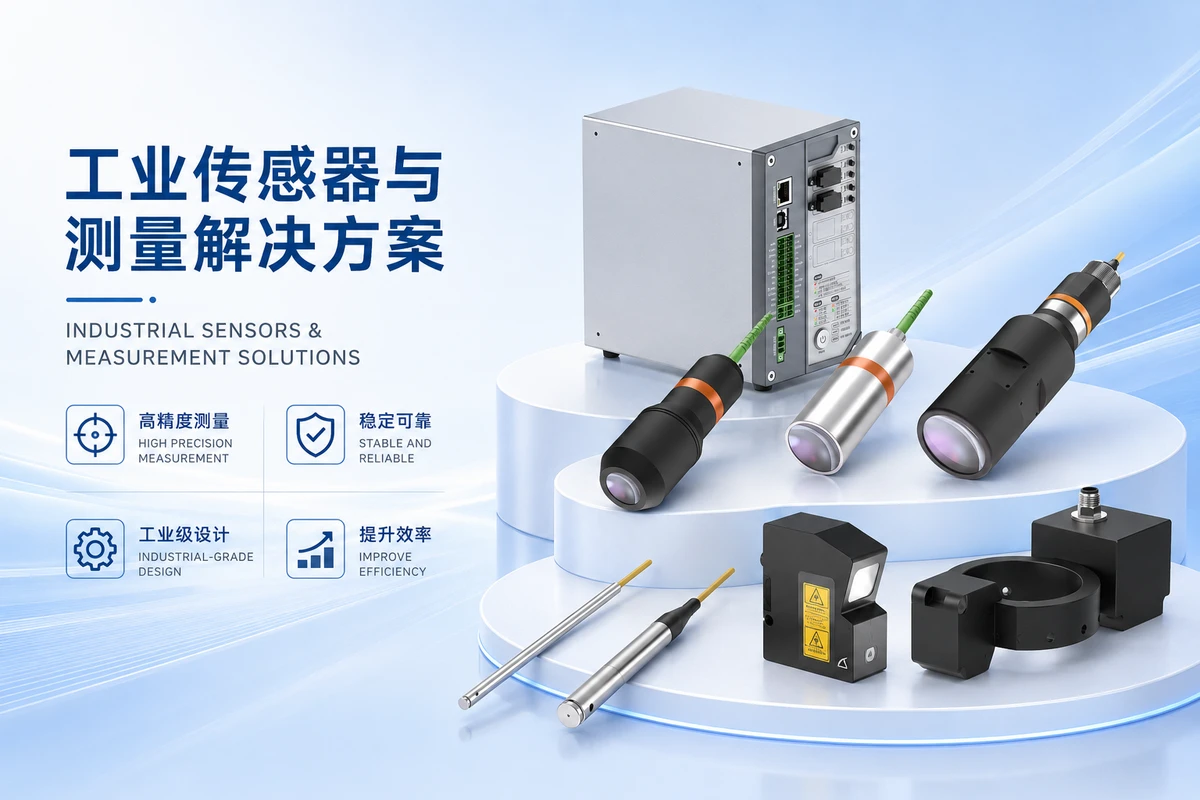
ST-P Series Laser Displacement Sensors: Core of High-Precision Measurement
The ST-P series is a high-precision laser triangulation displacement sensor from Shuertai, suitable for precision measurement scenarios requiring high repeatability, linearity, sampling speed, and long-term stability. This series covers short, medium, and long-distance measurement models with reference distances from 8 mm to 2250 mm and measurement ranges from ±0.8 mm to ±650 mm. The maximum repeatability can reach 0.02 μm, and the maximum sampling frequency can reach 160 kHz, making it suitable for detecting micro-displacement, high-speed vibration, shaft runout, step difference, flatness, thickness, and dynamic profile changes. Some models offer options for small spot, wide spot, ultra-wide spot, or blue light configurations to adapt to different materials and surface conditions. The series supports Ethernet, RS485 serial, and analog outputs (0–5V, 0–10V, ±5V, ±10V, 4–20mA), facilitating integration with PLCs, host computers, and automated inspection equipment.
Comparison of Three Measurement Schemes
Single Probe Scheme: Surface Height and Fluctuation Measurement
A single probe laser displacement sensor is used to detect surface height variations and relative fluctuations of the electrode sheet, suitable for evaluating coating uniformity, edge lifting, or post-calendering undulations. Installation is simple, but it cannot directly measure thickness without a known reference surface.
Dual Probe Through-Beam Scheme: Online Thickness Measurement
The dual probe through-beam scheme (one above and one below) calculates thickness by synchronously measuring the positions of the top and bottom surfaces. This method is unaffected by electrode sheet flutter and is suitable for online thickness measurement on high-speed production lines. The high sampling frequency of the ST-P series (up to 160 kHz) meets high-speed inspection requirements, but actual performance depends on line speed, environmental vibration, surface reflectivity, and other factors.
Reference Surface Measurement Scheme: Thickness Measurement on Stable Platforms
In this scheme, a single probe is installed above a stable platform or roller, using the platform as a reference to measure the surface height of the electrode sheet and indirectly obtain thickness. This setup is simple but requires a flat platform and no sheet flutter, making it suitable for offline or low-speed inspection.
Selection Recommendations
To accurately select a laser displacement sensor, customers are advised to provide the following information: material to be measured (e.g., copper foil, aluminum foil, coating material), thickness range, accuracy requirements, line speed, measurement width, installation space, communication method (Ethernet/RS485/analog), output signal type, and on-site photos or sample details. The Shuertai technical team will recommend suitable models based on specific working conditions and note that actual performance must be verified under on-site conditions.
Note: Parameters mentioned in this article need to be confirmed according to specific models. Actual measurement results depend on the material, installation structure, line speed, environmental vibration, surface reflectivity, and data acquisition method. Please review product models, parameters, application scenarios, and SEO information before publication.